
I’m not sure if this happens with sons, but when you have a teenage girl at one point in their life you will hear the dreaded phrase “I hate you”.
What I never expected with Bridget was to hear those words. First, because I truly don’t think that she understands hates. Second, she cannot articulate the most basic emotions that she feels.
Yet it hurts
Today was a great day, until it wasn’t
All she wanted for dinner was beans, (FYI B&M Black Beans) until they were cooked and then were too “cold” except they were actually too hot. That turned into her hitting her head on any hard surface (including my shoulder) and words I did not know she knew
And then I thought about my oldest. How there were moments during her teen years age years where I totally loved her but at times did not love her.
And I am sure there were times my eldest loved me but thought I was the stupidest person on earth.
This year has been difficult for Bridget, and us as parents. There is a medication regimen that we are terrified she will not adhere to if it is not
us administering. While we have never had a routine, full disclosure, as awesome as her dad is, if I am not here at night she sobs for hours until I tuck her in.
Quite frankly, we are balancing not creating behaviors with creating an environment where Bridget thrives.
It is a delicate balance. Catatonia continues to keep us humble at the same time it keeps us alert.
To the friends that have offered us respite, know it is a Bridget issue and not a you issue.
We, as a family are doing the best we can
At the moment she is doing incredibly well at school and saving her meltdowns for me, her safe plan to land
And we are okay with that, because we know that this is hard….but not as hard as waiting for her to roll over
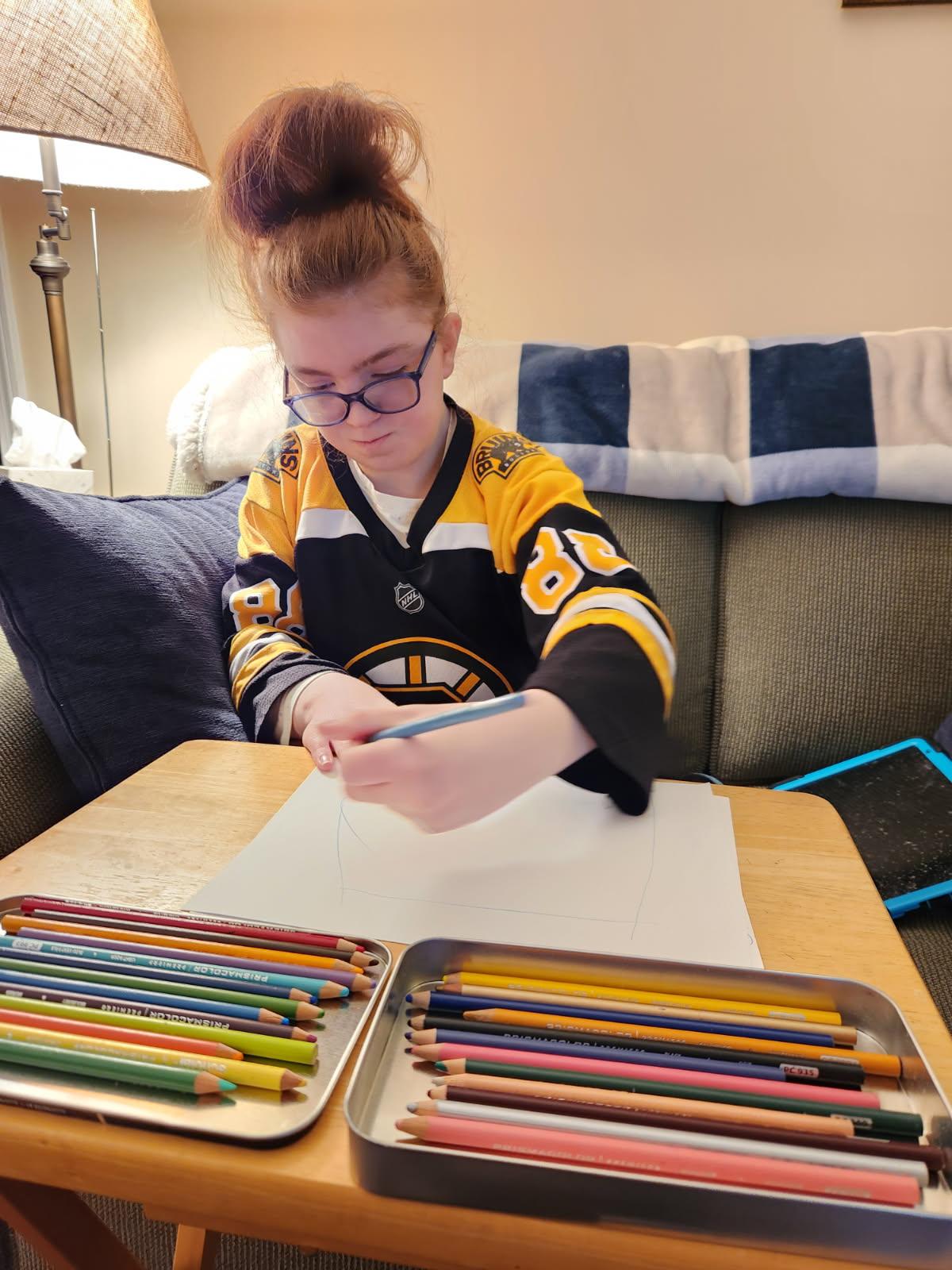
Because last week instead of being on her IPad she drew circles and was happy
and I am balancing let her be happy in her world while figuring out how to keep her in mine
So when she says I hate you, I hope she feels the love I feel for her




 (Un)Diagnosed and still okay