Tag Archives: rare disease

The little hits

I have always admired my PACS1 friends that have twins. I feel like it was easier for me, especially when the girls were younger, to have 5 years between them. When my eldest was out of the princess phase, it never bothered me that Bridget was not entering it. I have always wondered how those with twins, that had a front row seat to the differences within their children coped.

In my case, having five years between my girls has always made it easier. First, I had a built-in nanny (until she abandoned me to be all adult like and got to college HAHA). Second, at any age, I could reason with the eldest. No, I cannot do X because I am dealing with Y. Thankfully my eldest was never jealous but instead had tremendous empathy for her sister.

Then last weekend I was cleaning out the girls’ rooms. Bridget had not so secretly moved into her sister’s room. I decided to make her old room into a true guest room and began organizing her sister’s things. Trying to determine what I wanted to keep for memories, what she might want, what were things to pass on and what was truly trash-worthy.

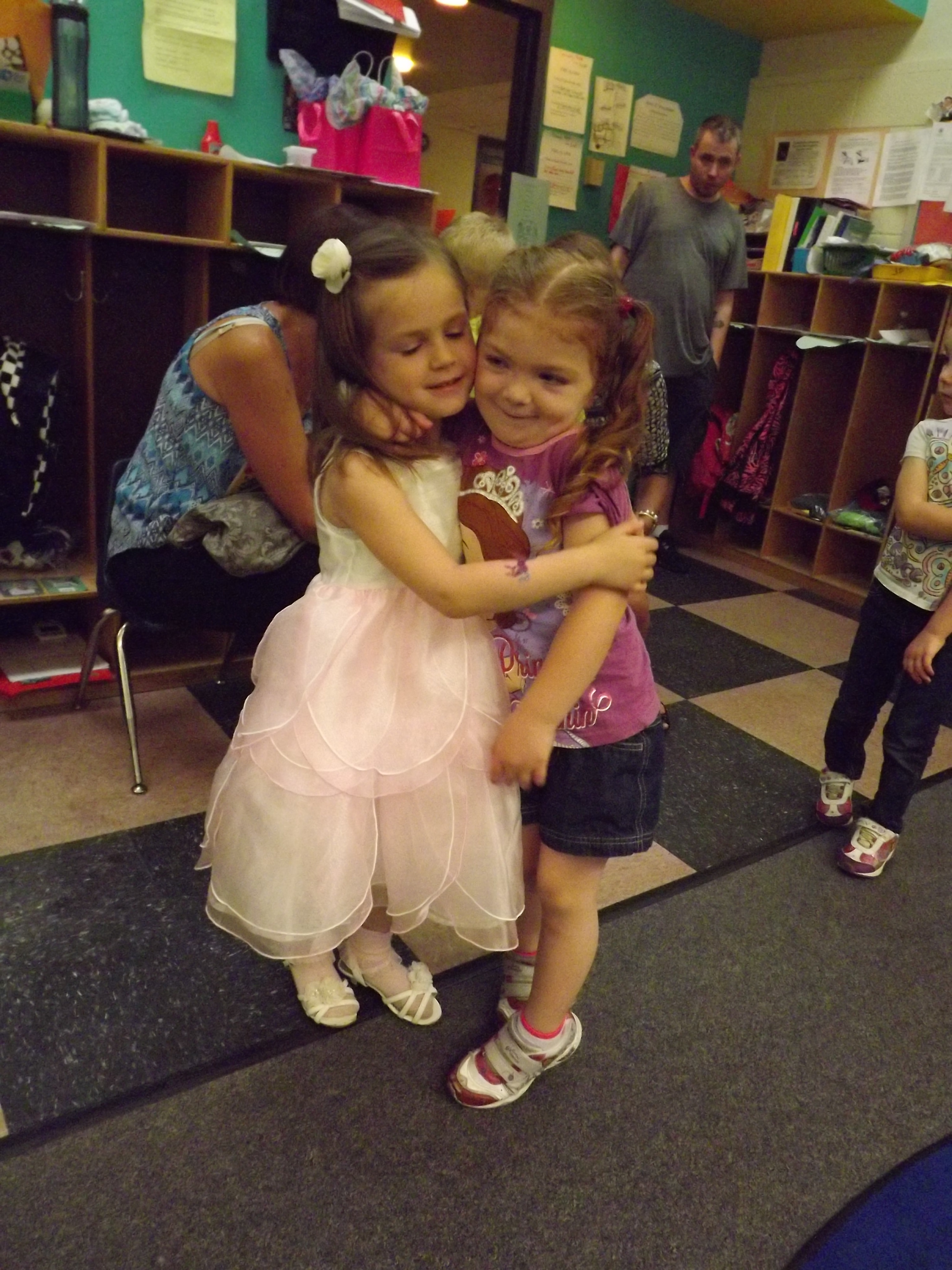
Then I came across this, and my heart broke a little.

It made me realize that I would never have this with Bridget.

Bridget’s bedroom is just that, a room with a bed in it. A place she sleeps. A place that is not filled with glitter (okay, thank God for that!), dolls or imagination. Bridget has never played; her sister would play independently for hours. Abby had such a vivid imagination, a sense of play and creativity.

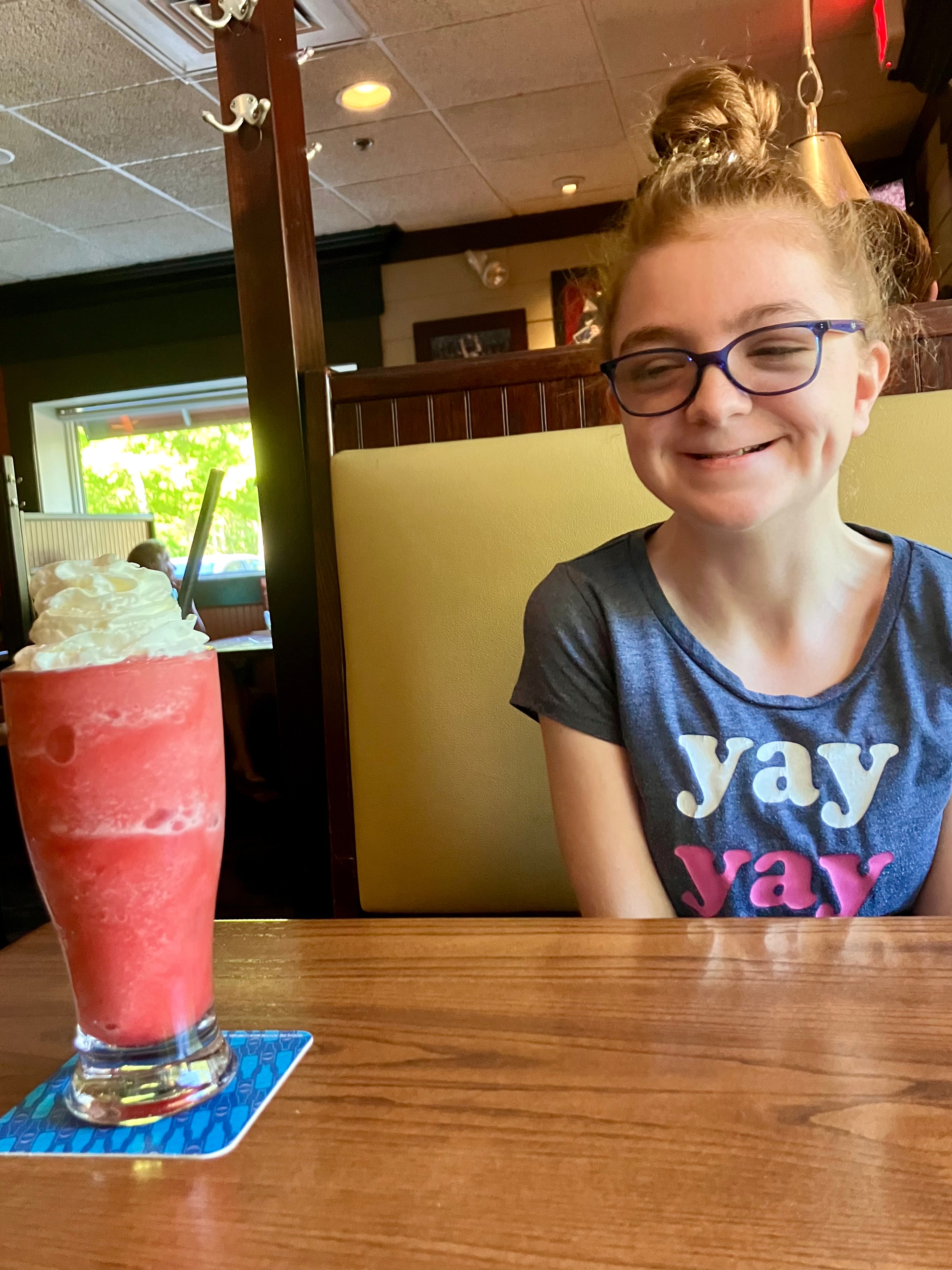
Bridget finds joy in other things, mostly Dunkin Donuts, dinner at the 99, strawberry daiquiris and her IPad.

And that is fine, because in each case both of my daughters are happy. Honestly, I love the 99 so that isn’t a hardship.

In moments like these, where I am remembering where Abby was at 12yrs old and how she is now in her 20’s living her very best life that it is so very different than her sister’s will ever be. That she got to not only graduate high school but choose to go to a college so far away that I have to wonder why she chose to leave the sandbar for the iceberg.

There are days where it is so much easier with Bridget, if I am being honest. Unlike with her sister at 16, there is definite teenage odor, but there is no eye roll. My car insurance has not gone up, since Bridget isn’t getting her permit. I won’t have to pay for college or worry about prom night.

But there are days, like when I go down memory lane, that I wish for just a moment that I had to worry about Bridget getting into the college of her choice

17 Things

Throughout Bridget’s life, while I may not always be Kerri-Sunshine, it has been actually easy to be Bridget’s mom. There have been well documented posts when that has not been the case, but in reality, those moments are blips within her life time.

When I look back over her 17 years, the moments that have brought me to my knees have been far less than the moments that have allowed me to let her live this best life. In honor of Bridget’s 17th birthday, I am sharing the 17 best things about being Bridget’s mom.

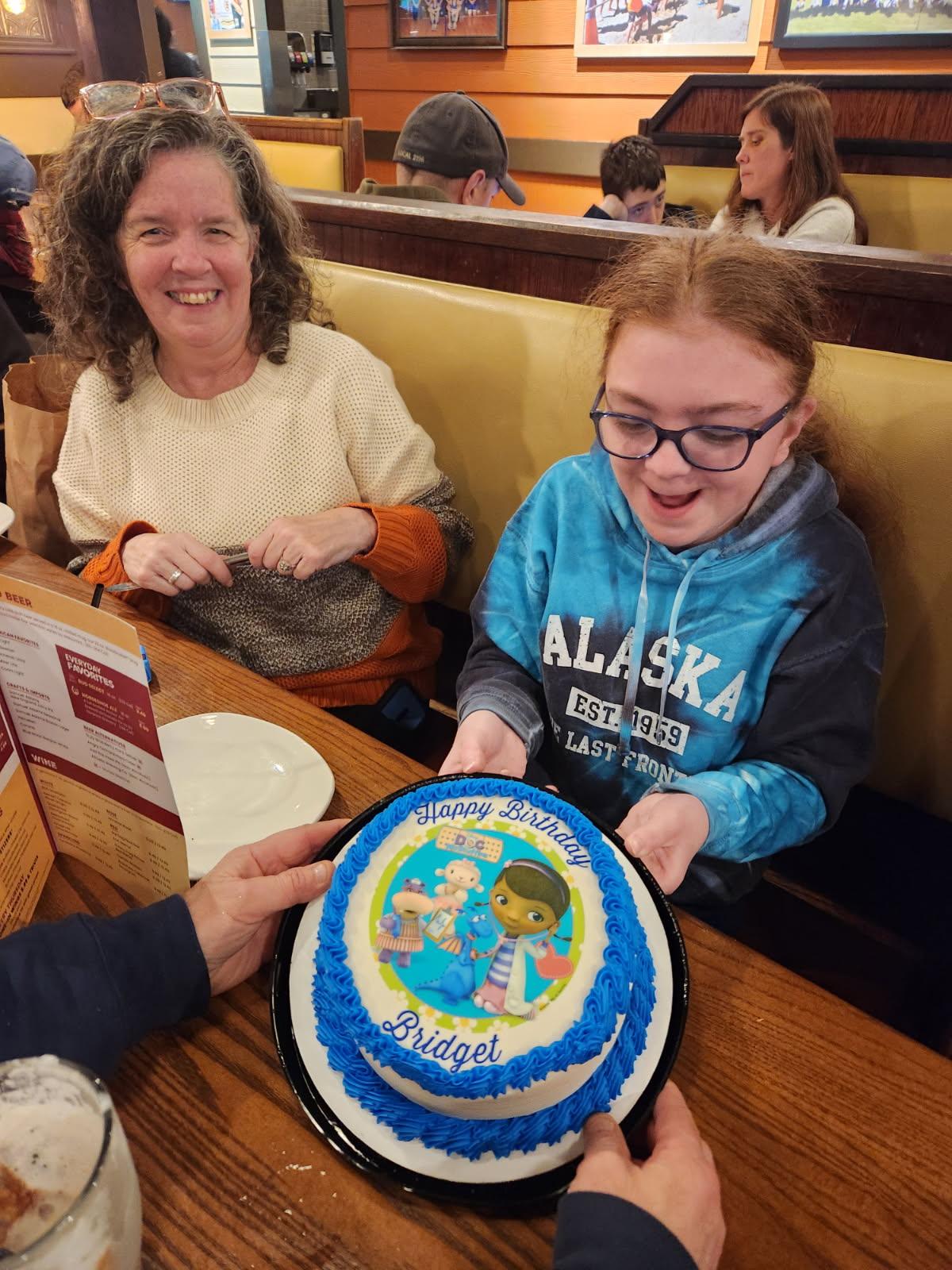
On her 17th birthday all she wanted was dinner at the 99 restaurants, with her strawberry daiquiri and Doc McStuffins Cake.

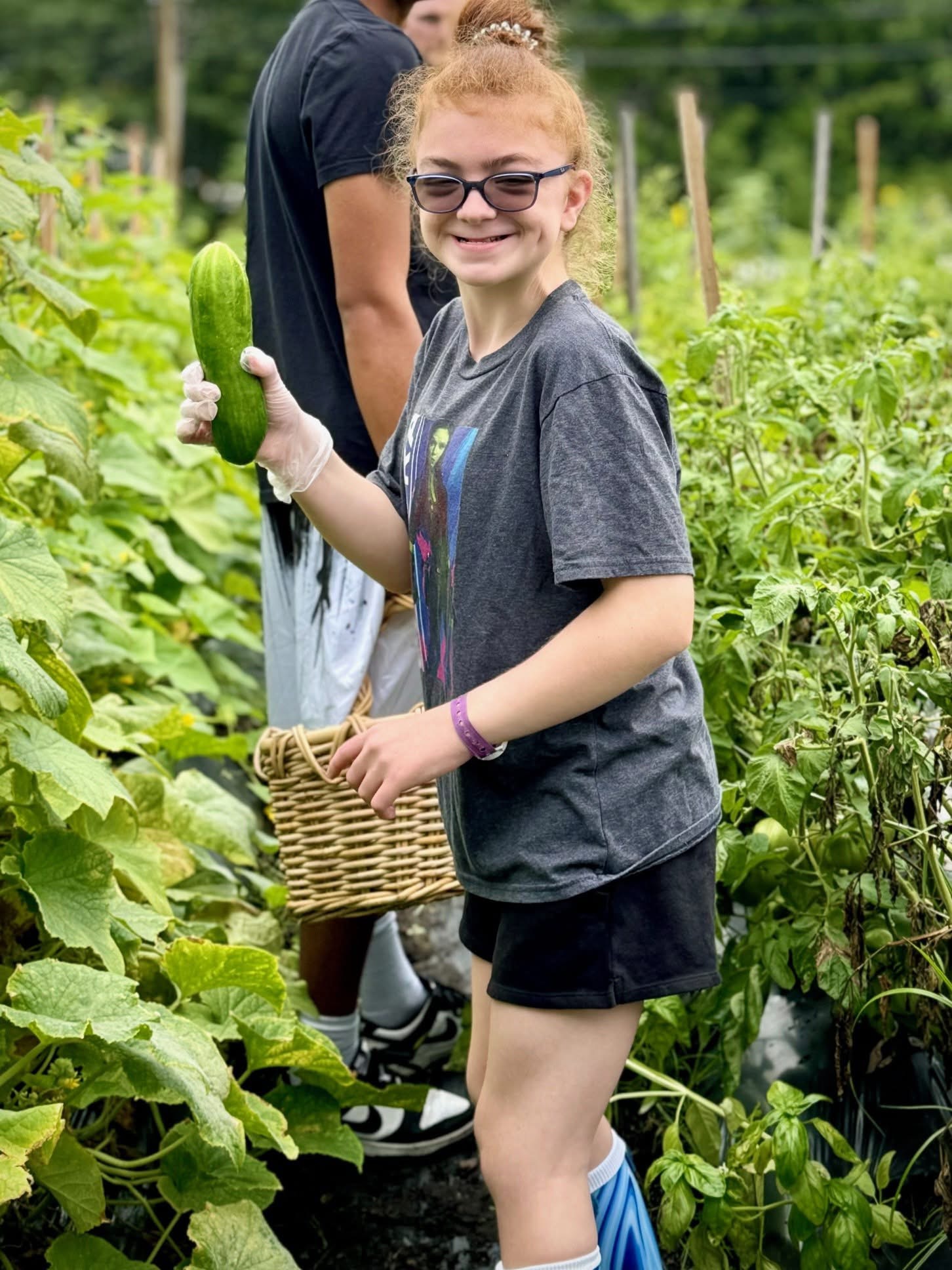
The joy she has working in her school’s greenhouse. Since her dad and I are not green thumbs, nor do we enjoy yard work, we have no idea why she loves this vocational site so much. We are just thankful it exists in her world.

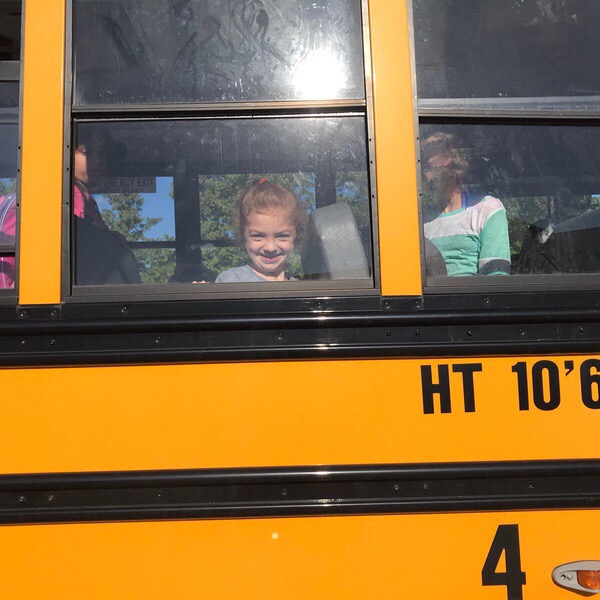
When in the public school, she learned how to ride big yellow school bus with her friends.

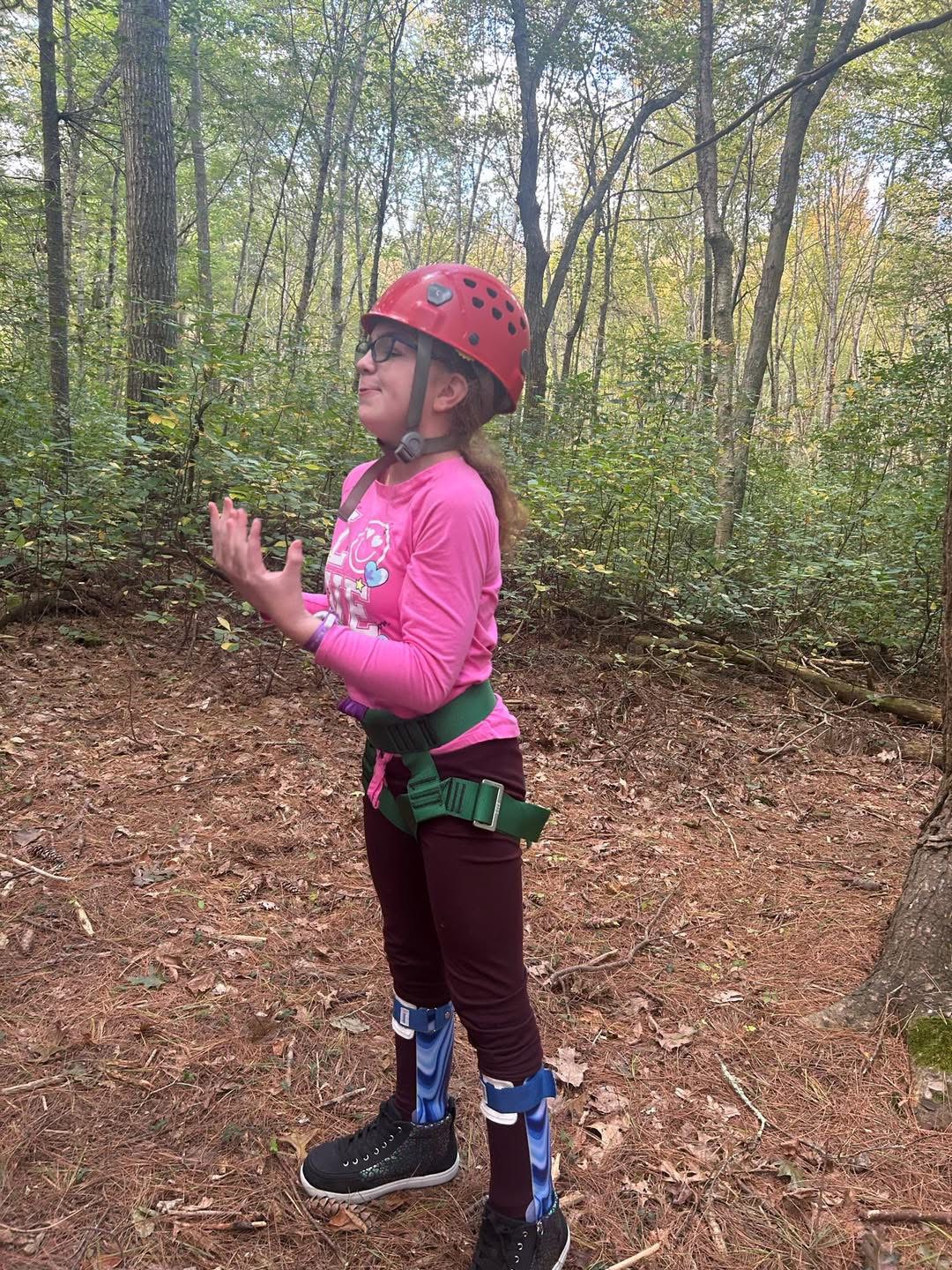
Her love of camping and kayaking.

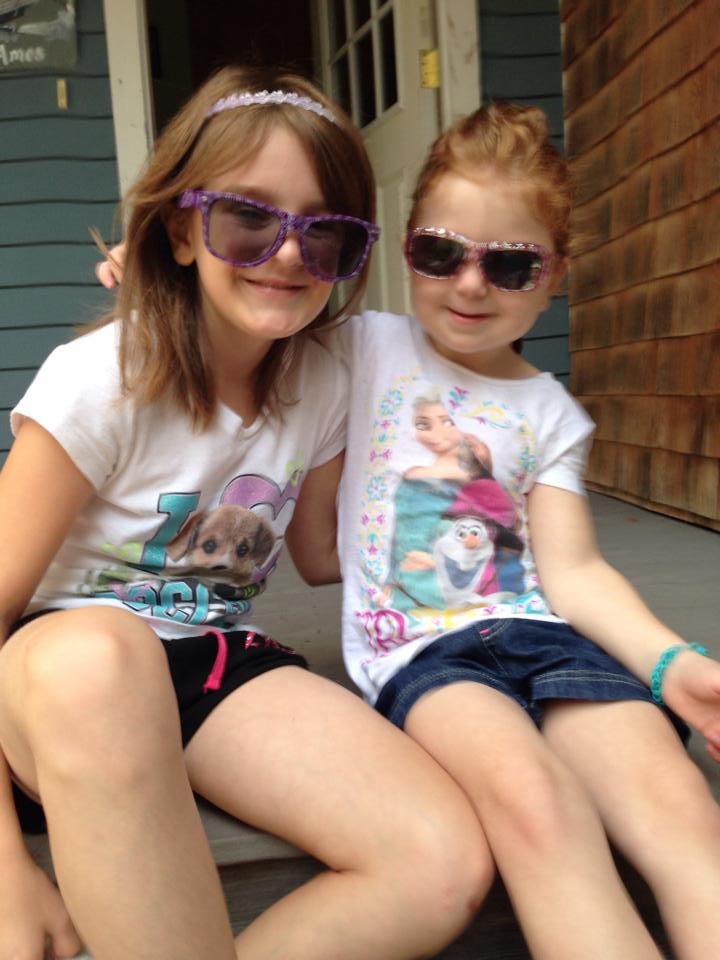
The bond she has with her sister.

She learned to jump and swing.

No matter how many times she has had to go to Children’s for painful procedures, she has always walked in with a smile. Also, that she has stopped pushing the emergency stop buttons in the elevator.

She talks! Sometimes we need context or she needs us to help her translate to someone what she is talking about, but the girl who would never, frequently convinces strangers in Market Basket that they need PINK pop tarts

The girl would never has rolled over and jumped, she swims and climbs!

After spending her toddler years in feeding therapy, she not only loves to eat but to bake and cook.

Her sense of fashion. For a time, it was dresses, then sparkly shoes and now as a girl after my own heart: wearing her Bruins jersey. Everywhere!

Bridget is the best travel companion. She is up for any road trip, brings a bag of snacks and has hardly any bathroom breaks. She offers random hugs and notices things like the sunset or that there is a Dunkin coming up. She doesn’t even mind sleeping in the car or a random parking lot if we are arriving before our reservation time. Though you do have to convince her that she cannot be in the drivers seat!

 The girl loves to camp. She would spend her year camping, if we let her. I hope it is because we are all together. But if I were being honest, it would probably be because there is usually a pool nearby.

Bridget is so kind and funny. She has, since pre-k, developed friendships both with her peers and her educational/therapeutic team. Her friendships look different from those her numerological age and those her developmental age. Yet, they are so similar. The joy they have within those friendships remains the same. The friends she left behind when we transferred her out of the traditional school system will still greet her with a smile and a hug.  She makes people laugh.

Bridget is not perfect, and I am not talking about her health issues. She is stubborn. She is sometimes disrespectful. She will try to avoid hard things. She will slam doors and refuse to do chores. She cheats at Candy Land and tries to at Uno. How awesome is it that she is a typical teenager in all the best ways possible.

Bridget has so many moments where I am wondering how she did that?   I know it is sheer determination. For example, the day she took over her sister’s bedroom. She not only moved everything she did not want into another room, but she also moved all of her bedding and special things into Abbey’s room. When she was younger, she used to move all of our furniture into different rooms in some kind of fen shui.   She has such determination and a way to make things work, for her (not always for anyone else).

Just months before her first birthday, we were told Bridget would never amount to anything. She would never roll over, have a quality of life, speak or walk. I don’t know how much she heard or understood, but she seems to have taken on that challenge and has decided to tell the world just let me show you what I can do next.  She has climbed mountains, both figuratively and literally since that prognosis.

She has amazed me every single day of her 17 years. I know the next 17 years there will be moments that bring me to my knees, send a WTF I CANNOT DO THIS ANYMORE text to my village. And they will remind me that not only can I do this, but Bridget will also triumph over any obstacle PACS1 puts in her way.

Happy 17th birthday, my sweet Bridget. Thank you for choosing me to be your mom. Thank you for teaching me every day, that yes there are hard moments but there are so many moments of joy.

Even if we are climbing the mountain, you are always holding my hand.

Sometimes we are not the same

I write and believe there are a lot of times my life as a special needs mom is the same as my role as a typical mom.

While I believe in those times, there are so many times when my neurotypical mom role with my oldest is so divergent as my role as Bridget’s mom

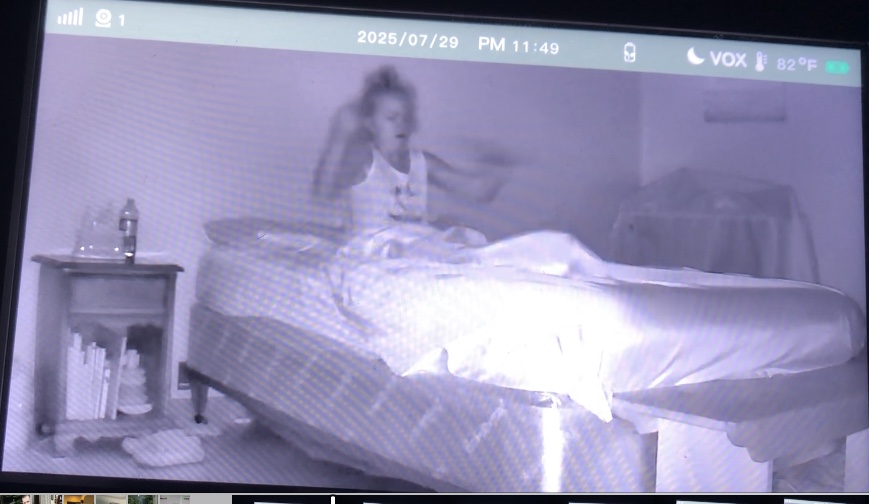
I’m sitting here at 9pm with a baby monitor next to me because I have to watch her for stimming, check in if she needs the bathroom and when the monitor goes off at 1am to make sure she’s not out of bed getting her iPad

Screenshot

Unlike my eldest, I have full control of Bridget’s medical chart and finances

When my eldest was 16y old she got home after school by herself. With Bridget I rush home from work to meet the SPED van that doesn’t call me when two children are out that day so she will be dropped off 30 minutes ahead if schedule

When my eldest was 16 I left her home with Bridget while I was at a work conference in Vegas. For the weekend. I cannot leave Bridget home long enough to go to the grocery store

When my eldest went to college I should’ve been an empty nester. With Bridget that will never be a phase in my life.

This is all okay, honestly. It is okay that Bridget is living a different life than her sister. As much as I like to focus on the similarities, rather than the differences, I also know that it is important to remember that they are different.

Just like all siblings.

The rules keep changing

When your child is diagnosed for the first 5 years of their life with “we know there is something genetically wrong, but not what.” Then you finally get a diagnosis, and you are told it is a genetic disease so rare they don’t know what PACS1 is, but she has it! You learn that parents are your best go-to for information.

Even before Bridget was diagnosed, her therapies were trial and error. I found more information from sharing with other parents in the waiting room what worked for their child and what might benefit my own.

Bridget does not age out of the school system, but already I am learning that I need to be aware of how things change, even before I am ready. For example, we were always that a child of Children’s Hospital is always a patient there. Yet across the country that is changing.

I never imaged that she would age out of her healthcare system.

Which makes sense when I think logically about it. A pediatric cardiologist knows the pediatric heart. They are not trained in the heart conditions and complications of a 40-year-old. This is devastating to the parent who has been cocooned in the bubble wrap of a children’s hospital where their child has been a patient since the NICU. While the adult physician might be the best to diagnose and treat her non-pediatric body, that doctor has no idea how to interact with her 4-year-old mind. This has proven true any time I have taken Bridget to a local doctor, be it an optometrist or an emergency room doctor and nurse.

The adult provider is just not trained in the pediatric mind. Just as the pediatric gastroenterologist is not trained in the adult digestive system.

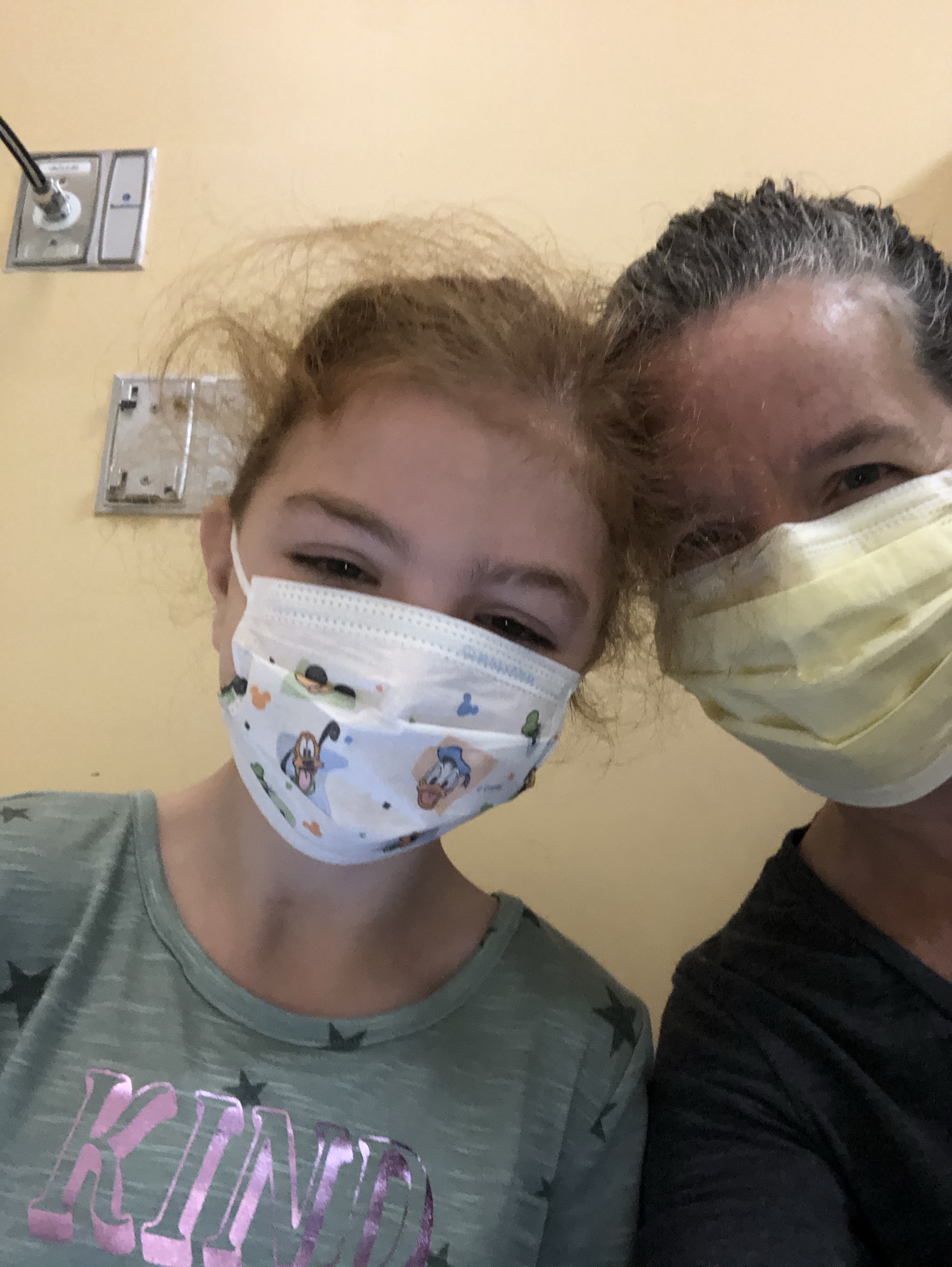
Even the waiting rooms are not equipped to treat children soon to be adults like Bridget. For example, last month we were in the waiting room at Children’s Hospital. Bridget was having a VERY difficult time. She was in full meltdown mode. Hitting me, while alternatively hugging me. Crying and sobbing after spending almost 4 hours in traffic trying to get to a 15-minute appointment with her favorite GI.

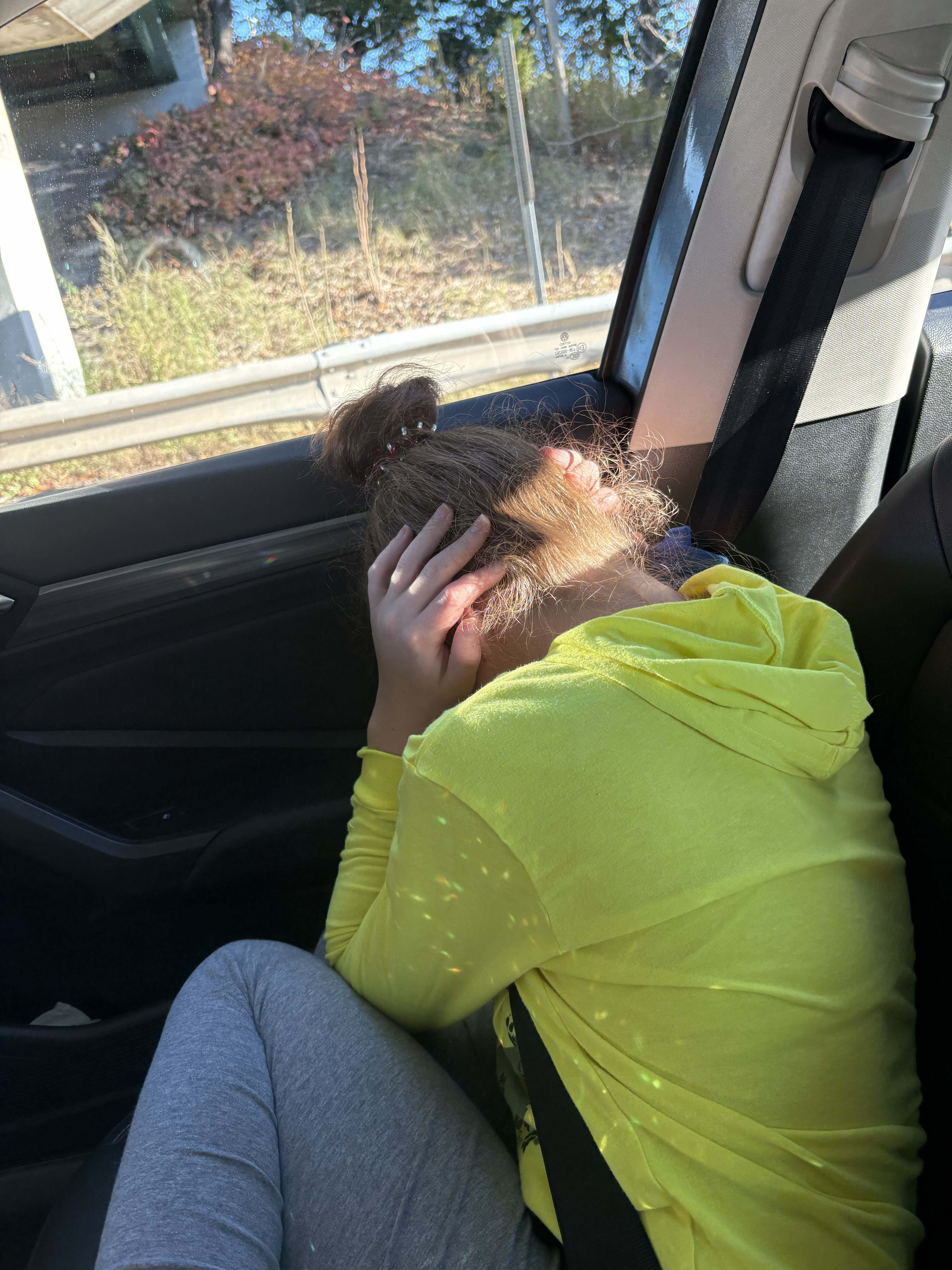
Bridget after 3.5 hours in Boston Traffic

The team at Children’s did not embarrass us, they did not judge us. Instead, they quietly approached and said, “Bridget’s mom, we opened up an exam room for you. We can do her vitals in a quiet space for her to wait for Dr. Rosen”.

Over the summer, when Bridget was adjusting to the catatonia medications, there was an issue obtaining her Ativan. The pharmacy told me “She could not miss the medication without serious complications”. Told me to go to our local ER and explain the medication need. Bridget was having such a difficult time anyway, now we were entering a crowded ER with a triage nurse that was all done with her day. Instead of seeing a child in crisis, she saw a 16-year-old out of control and basically told us they could not help.

There was no empathy (yes, I lodged a complaint with the hospital). There was no understanding that this is not just a teenager who was abusing her mom but was having a serious medical issue that her 4-year-old brain could not understand.

On a less serious note, about 3 years ago we took Bridget to a local ophthalmologist for a routine eye exam. The waiting room was fine. The exam room? Not so much. The doctor is great with teens; we had taken Bridget’s older sister to this same doctor.

But the doctor, while trained on the eyes has never encountered a child with Bridget’s profile before.

Quite simply, adult doctors have not been trained or exposed to those with intellectual disabilities (to my knowledge and recent experiences).

Whereas those of us lucky enough to have been cared for by Boston Children’s Hospital have been spoiled. We have had doctors since birth, or in the most recent case of Bridget’s latest PACS1 complication treated by physicians, nurse practitioners, fellows, lab techs, nurses and even cafeteria workers who look at our children as persons in need of empathy and care.

From janitors to doctors, we have been treated humanely.

I think I speak for all parents whose children have intellectual disabilities and complex care issues that we are terrified of this relatively new change in our children’s healthcare.

This is not simply leaving a pediatrician for an adult primary care provider.

This is leaving home and ending up in a country where no one speaks your language.

Thankfully we have 5 more years, but as every doctor Bridget has seen this fall has already started the conversation about transitioning to adult care, I am not confident that we have those 5 years.

As I talk with parents around the country, I know this is not just happening in Boston but nationwide.

And that is frightening for all of us

From one week old to 16 years old, Children’s has been our safe place, my hope is that in the next 5 years, whomever started this trend realizes the impact on our families and truly designs a plan for our families.

The struggle is real…. Possible tissue warning ahead

I’ve been so focused on all the signs I have missed when catatonia slowly took over Bridget’s life and then battling it to get my girl back to where she was a year ago, I did not recognize the signs that catatonia was taking over my life as well.

Or maybe it is menopausal madness.

Maybe it is both?

Maybe it is that I am just tired of battling PACS1. Every time I think I have a handle on this life, every 12 to 18m BAM another diagnosis is obtained by Bridget. And while this is difficult to admit, some days I get tired of fighting.

It would be easier, honestly, just to let PACS1 take over. Let Bridget retreat into her own world, instead of battling this fucking disease that never stops trying to take my girl from me. It is also difficult to realize that Bridget is happy, in that world I cannot reach. Who am I to keep battling her to join mine?

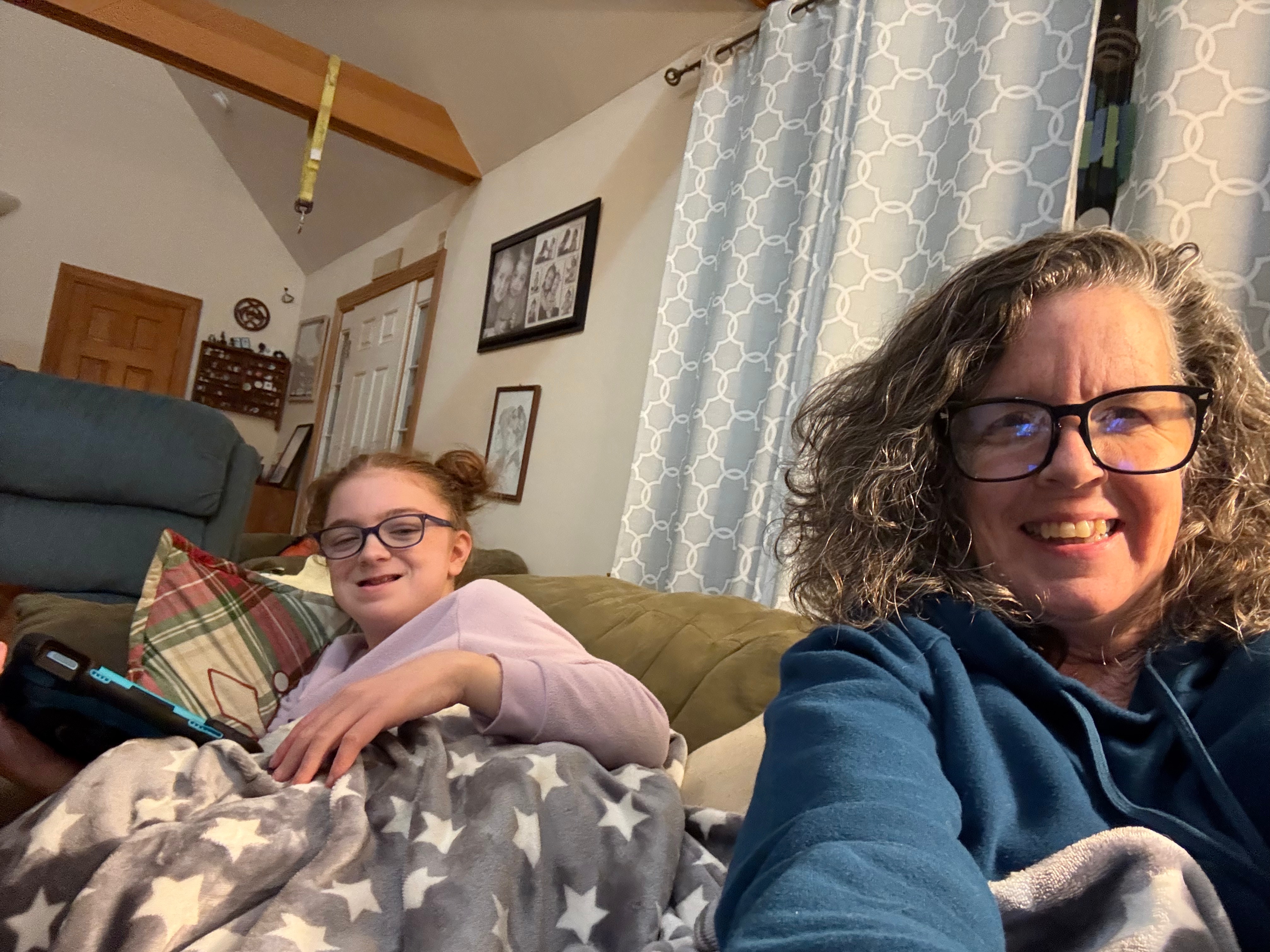
Then there are moments like this…. where I know she wants to be with me, in the real world. As she snuggles on the couch (yes, with her IPad) and make sure that not only is she as close as humanly possible to me but makes sure that I am under the blanket with her.

It is these little moments, that I know the fight against PACS1 is worth it.

But over the past year, as I made inadvertent concessions as catatonia slowly took over my girl’s heart and brain, I was losing myself. I started to not make Bridget go out into the world, because she was so unhappy. I started not talking on speaker phone with her sister, because it was too difficult for Bridget to hear her voice but have her not be home. I stopped going for walks, because I was afraid to leave her alone for even 15 minutes. I stopped cooking healthy meals because she was happier eating plain pasta and if her dad wasn’t home popcorn for dinner is just vegetables and dairy so that counts, right? And wine is grapes so that is like an extra helping of fruit. (Kidding! Okay kind of true)

Unknowingly, for the first time PACS1 started affecting my mental and physical health.

I stopped checking in on friends, which again I know I don’t have to, but my happy place is caring for others. I have this friend that literally email and/or text multiple times a day. I stopped doing that because I felt like I was too needy and she had a lot going on in her life. I felt like I was taking advantage of her, and others, by always being in distress. Another friend group chat, I stopped posting and only responded. I pulled away from important support systems. Isolating myself because I hated that I could not get off the pity party.

Yet I know, those who know me are screaming at the screen right now that I am an idiot. That they want to be there for me, and I am not the needy friend.

But I’m tired of crying. I am tired. I am tired of having to struggle to find 10 things to remind me that my life is awesome. That I know how important to find those 10 things, so I remain invested in this life, yet I let that slide.

Then I think back, and I realize it isn’t just this past year that I have let myself go. That I haven’t been there for others as much as I should. That I have been selfish and wallowing. It was not any one thing, but a culmination of fighting for 16 years to make sure that Bridget did not just survive but thrive.

Every parent does this. Even if your child is Facebook life perfect, you have fought for them to be perceived this way. You have put your child first, always. You have supported them financially, socially and with love.

I know that my life with Bridget is no different than yours. So why am I struggling so much?

Is it that I am almost 55-years old and wondering how much more fight I have in me? Knowing that this is a rhetorical question, because I will fight one week longer than Bridget lives.

Is it menopausal madness? Like the fact that my husband makes so much freaking noise, even when he sleeps! Is my threshold lower dealing with Bridget’s ongoing issues because my hormones are all done?

Or do I just need to do what I do best and create a plan of action to get out of this seemingly never ending funk?

Spoiler alert…. I’m going with a plan of action.

I know I need to be as dedicated to myself as I am to Bridget (and yes, her dad and sister).

I just need to reset my priorities and make sure that I make sure I put myself on the list of things to take care of.

One more week

Most parents want their child to outlive them.

There is a common refrain with parents whose child has special needs:

I want to live one day longer than my child.

One more way this life with Bridget is different than my life with her sister.

With Bridget’s latest PACS1 hurdle this year, one of my biggest struggles was knowing that if she was in a residential program, if I was not in her life every day was knowing in my soul that the catatonia would have gone unreported and untreated.

That is not saying I am perfect or the only one that cares for Bridget. But I am her natural historian. I am the keeper of the medical record. I am the one that has developed a relationship with her team (medical, therapeutic and educational) that when I had concerns about her stimming listened to me and kept searching for an answer.

While I have been struggling with the guilt of the treatment course, the larger battle for sanity was going down the rabbit hole of if I was not willing to advocate for her, if I was not so in-tune with Bridget, what would have happened?

And that is why each and every special needs parent hopes to live one day longer than their child.

Because while we have a village, we have support and people who love our child they are not in the day-to-day, they don’t know the medical history or treatments that have been tried and/or adapted for success.

I am lucky, I am not a single parent. Yet as awesome as Bridget’s dad is…I am the primary caregiver and knowledge base. Some days it is a heavy burden, being the keeper of Bridget. I am lucky that I have a husband who does his best to share the load. I have friendships that do whatever I need, in the moment I need it.

Bridget is lucky, because she has a sibling and cousins that have promised to care for her long after I am gone. And as much I am grateful for that, I know it won’t be the same for Bridget. Not because they cannot but because no one really knows what life with Bridget is like and I don’t ever wish her to be a burden.

This summer, we almost lost Bridget again and I realized that I do not want to live one more day than Bridget.

I want to live a week before the grief is too much to bear, living without her.

I want to celebrate Bridget. I want the world to know that the girl who was told she would never did so much more than we ever imagined.

She rolled over

She walked.

She jumped

She talked and convinced an elderly lady at Market Basket that she “needed” the pop-tarts Bridget put in her basket.

She has made friends and an impact.

She has redefined my expectations, once again.

She has battled and is doing her best to win another fight against PACS1

Bridget will always be fighting PACS1.

And that I why I need to live one week longer than she does.

To tell her story, so that her life is not about her struggles but about her impact.

It’s IEP Season

For most parents, going back to school means buying new school supplies (another pair of scissors!), fighting with your child over new sneakers and back-to-school clothes.

For the special needs parent, it means that the IEP season is on us and we have to review the current IEP to see what goals our child have attempted to accomplish, which goals were good on paper but an epic fail in reality, what new goals we want to see our child attempt and the parent concern statement.

The dreaded parent concern statement. How does a parent whose child has significant special needs create a “concern statement”. Our child’s entire being is a concern. Yes, we want the IEP to be a guide of how to address the concerns. But in reality, there is no way this piece of paper is going to address them. Even if we concentrate on what the school team needs to focus on, forgetting about every other aspect of our child’s life, there is not enough ink in the world to truly capture a parent’s concern.

I have been incredibly lucky that since Bridget’s first IEP at 3-years old (before I even knew what an IEP was), the IEP team has always been a true team. Collaborating together to create a document to guide the education and progress of Bridget. In the 13 years since, there really have been only two times that I feel I had to go toe-to-toe with the educators to remind them that while we are a team, I am the Captain of Team Bridget.

Looking back, when Bridget was younger the IEP was about trying to catch her up to her peers. As she aged, and the gap became too obvious to ignore the IEP became a document to relocate Bridget from the traditional school system to a specialized school that is more equipped to fulfill her significant needs.

As she gets older, the IEP becomes less about learning how to read and more about how to stay at a task for increments of time so that she may one day work at a vocation. It is about learning how to hand a card with her information on it in the case she gets lost. How to navigate a crosswalk and parking lot safely.

As her parent, my expectations are sometimes not in alignment with her capacity.

This is why each participant on her IEP team is important and must come into the room to collaborate with kindness.

This morning, before the IEP meeting I addressed the team with this intention:

If my expectations for Bridget are too low (like giving up on her learning to read), they need to tell me. If my expectations are too high (like her working at a job), I need to know that to.

I believe that at times the educators and therapists are afraid to tell the parent that while they adore your child, there is a reason they are not in the traditional public school.

As we worked through the IEP, I realized that Bridget has entered a new era in her life. We are working on function over form. We are working on making her safe, helping her communicate more effectively, and how to navigate a vocational site.

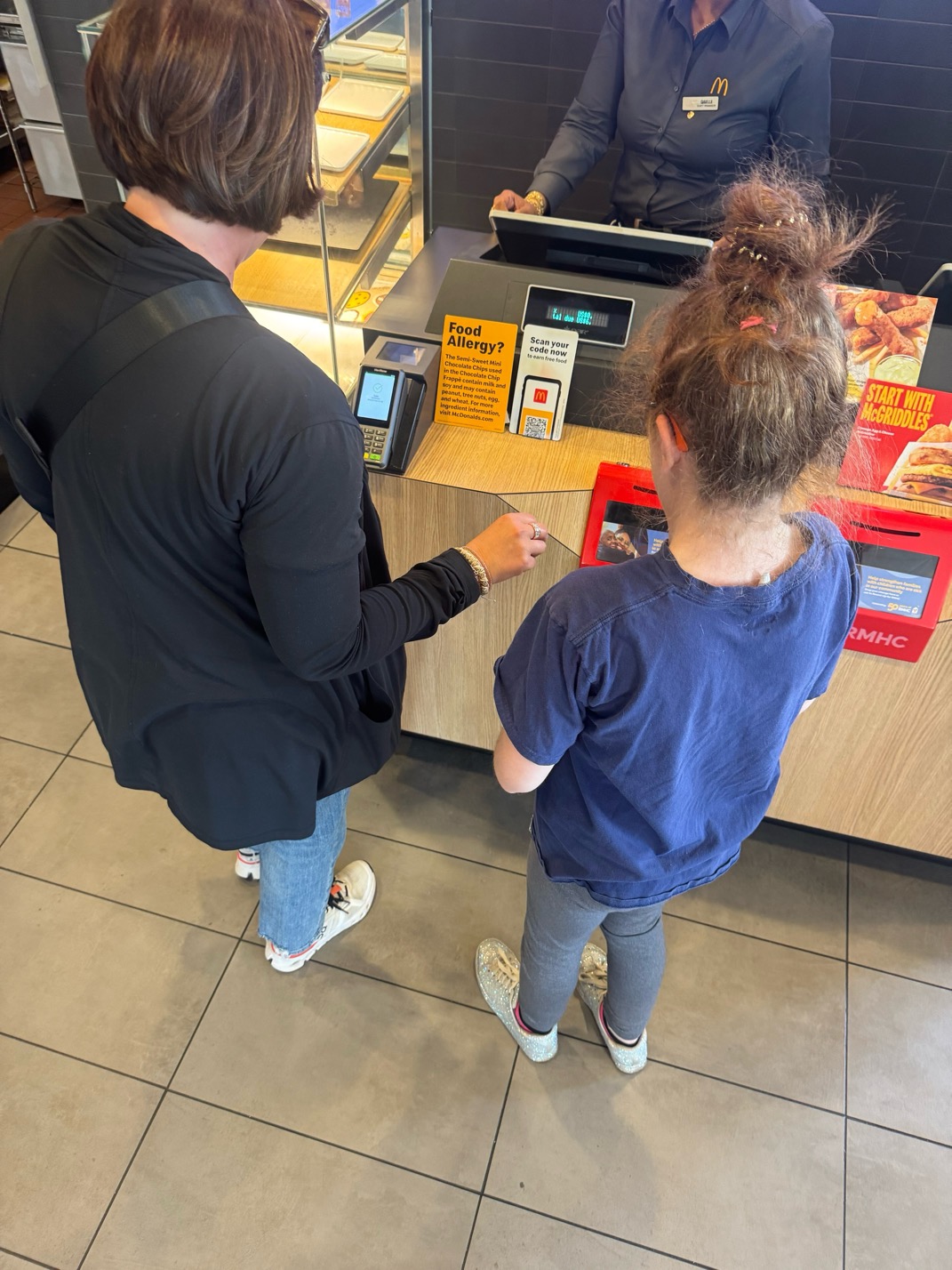
Bridget is learning how to use a visual menu at McDonalds and how to use a gift card to get her strawberry milkshake.

There are still academics being taught, but not in the traditional sense. Instead of learning algebra, Bridget is learning how to follow a recipe with visuals. Instead of learning how to read a novel, Bridget is learning how to follow a visual schedule.

I admit to this being a painful realization, but that pain is easier to bear when I remember this was the child that wasn’t supposed to survived.

And thanks to the time and compassion her IEP team being invested over the past 14 years…

Bridget has thrived.

When you feel defeated….

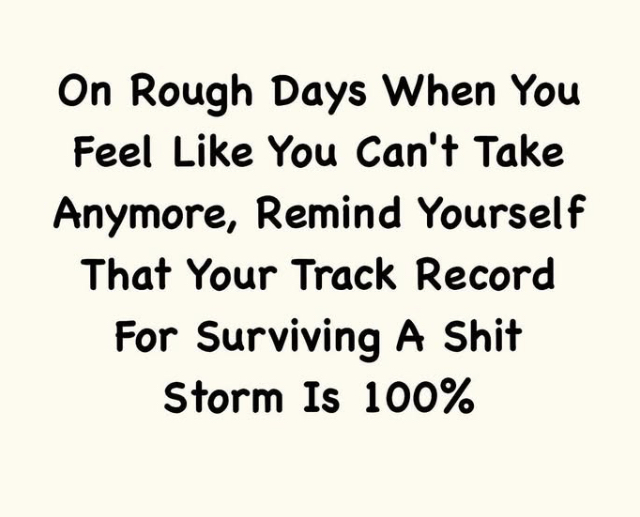
I was sent this meme the other day and it really put this unexpected life in perspective.

As much as I hate, and I mean HATE in JC CAPS, how much Bridget has suffered in her 16 years, she not only survives she triumphs.

While Bridget battles, I admit to faltering when she has to survive the shit storm. Tethered Spinal Cord just after she came off a pediatric walker? Cue the ugly tears and emergency phone call to my BFF. Going to a pre-K all school playdate where she was knocked over on the playground and I lost it and said she was going to be homeschooled. Thankfully, this was a very brief moment until sanity restored regarding my homeschooling lack of patience which was reinforced when Covid shut down the education system.

Every 12-18m the PACS1 gift that keeps on giving creates some other storm that Bridget (and her family) will need to weather. In the past five years, Bridget has triumphed over relocating schools, Achillies tendon surgery, oral surgery and is now fighting catatonia.

Since 2008, Bridget’s battle average is currently 100% kicking PACS1’s ass.

My bet is on my tiny but mighty warrior.

Not to tempt fate or anything!

Milestone Envy

When Bridget was younger, it was so easy to celebrate the milestones that she worked so hard to achieve. She might not have walked, rolled over or jumped on the developmental scale like her more typical peers…eventually she mastered them.

Bridget at field day around age 7. When we never thought she would be able to walk, she hoola-hooped!

When your child is disabled, you start celebrating the tiniest milestones (she ate without choking!) and overcoming at one time seemed like a skill we would have to give up on. And then later once again, her proving us wrong. It would just take more time and be done in a way that we never expected.

With Bridget’s sister, I have always been laid back when it came to transitions. Going from pre-k to kindergarten? That is supposed to happen. No tears. Turning 16 and getting her license. That is the natural progression. I would have been more upset if she did not get her license. When she graduated high school, she had four options: college, a job with an apartment, the military or not my house. And yes, I not only had that conversation with her but with her high school guidance counselor.

With Bridget, her obtaining those “smaller” milestones that were celebrated seem so far away.

Because at some point, you realize this child is never “catching up”.

Bridget will do many things, but she won’t ever get a driver’s license. She will never go to college, and she will never get married or have a family of her own.

She will never get that “first job” that teaches her how to be a member of a productive workforce. She will one day get a job, but it will be more of a life skill and not a lifestyle choice.

Bridget will never get married or have a family. She will always be a part of a family. Living either with us or her sister. But Bridget will never know the joy of seeing her child’s first steps to them graduating college.

Bridget will not go to college. Now with her sister, no one was more surprised that I was when she decided to go to college. I didn’t expect it to be on an iceberg. I didn’t expect this child who wanted to quit school in third grade, become a student on the Dean’s list. Bridget will never get to shock me that way. She will stay in her special ed program until the day before her 22nd birthday. She will not live in a dorm, have a first love or find her career.

This isn’t anyone putting limits on Bridget. It is the reality when your child is forever 4-years-old. That reality keeps getting closer, the older Bridget gets.

Most days that’s okay with her dad and me. Because we do truly know who this child is, she is our forever child who will do great things and bring tremendous joy to not only our lives but to just about everyone she meets.

Then there are those days when you see her classmates from when she was in a typical public school go to prom, get their learners permits and start touring colleges. When we see the photos of homecoming, dances and sporting events. When we are at a restaurant and our hostess or waitress used to be in kindergarten with Bridget.

And in those moments, it hurts just a bit that I cannot tell her IEP team that her choices at graduation are college, the military or not my couch.

Even though we don’t really mind her being there.

Keeping Score

One of the most difficult things I am learning in this time of Bridget’s life is discerning what is behavioral versus what aspects of this newest disease is a mental health issue. Looking back (because it is always easier to see what I did wrong than to predict future mistakes), Catatonia began infiltrating our lives last summer.

As with all things Bridget-itis, the small things I either missed or decided were not important or they were becoming a part of her quirky and cute nature. What I thought was behaviors over time became the tools Catatonia used to try to keep my girl in her head and take her out of our world.

Read more: Keeping Score

Bridget started refusing to leave the house. Going to the grocery store (one of her favorite places) became a negotiation if there wasn’t someone to stay in the car with her. Thinking it was behavioral, I made her push through when there was no other option. I didn’t realize she was having anxiety, and it was mentally painful for her to walk through those doors. Score 1 to Catatonia.

Bridget started talking only to me at home. I thought (at first) it was funny that she would “hide” her face from her dad and whisper to me the answer to whatever he was asking. Instead of being a new behavior, she was having mental anxiety that led to select mutism. Score 2 to Catatonia.

Bridget, while camping, refused to come to the campfire. Spent most of her time not only in the camper, but in her bunk. Bad mom moment, I kind of enjoyed the peace and quiet of camping, reading my book by the fire not having to listen to freaking Doc McStuffins on repeat. Instead, Bridget was showing the first signs of depression. Score 3 to Catatonia.

I asked the Doctor about all of these new diagnoses. If developmentally, Bridget’s brain is 4 years old, what the freak does she have to be depressed or anxious about? Okay, honestly there was a different “f” word in there.

Instead of reprimanding my use of adult language (perks of talking to her psychologist, they’re probably used to much worse), he gently explained that while Bridget’s mind might be 4 years-old, her body is not. Not only is her brain continuing to adapt and fight PACS1, but it is also having to deal with all the other hormonal, body and insert your teenage angst issue here concerns. Since her brain does not know how to deal with all that onslaught, it retreated into a state of catatonia.

Taking a minute here to remind all of you that I am not a doctor and may have misunderstood or misinterpreted all the information the Doctors have thrown at us over the past 4 months. If you have any of these issues or concerns, don’t trust me. Seek medical advice from a medical professional.

Carrying on after that short PSA. The Doctor tried to explain to me that with catatonia, depression, anxiety, select mutism and PACS1 (plus every other diagnosis Bridget has) what I am / have been afraid were behaviors I needed to help her correct, where actual mental health issues that we need to treat.

I asked how to I make sure that I don’t inadvertently create a behavior during this time?

I totally stumped the medical team with that one!

Here is the dilemma, the medical team is treating Bridget the patient. They are treating all the symptoms associated with her new diseases. They are also trying to be caring and cognizant of how her illnesses now affect our lives. (FYI getting up at 6am every day to give her a med SUCKS in JC CAPS, especially on the weekends). Yet they never thought of what behaviors we might create while treating her medical issues.

For example, what if I let Bridget not participate in grocery shopping now, while she is in crisis. What happens when she is no longer in crisis but has a learned behavior of staying in the car with dad? I guess that is okay, if he is home. But what if he is not and I have to run to the pharmacy?

What happens if we isolate ourselves now, to protect her from all her illnesses but that leads to us never leaving the house? (Self-serving PSA–if I am stuck in this house for more than 3 days, not allowed to leave, send Pinot Grigio).

Thankfully, this new cohort of Doctors listen and care. The advice is that if a behavior is not impacting Bridget’s life (like her increased stimming) then it is not a problem. For me not to sweat the small stuff (they are obviously new to the team). The behaviors that do impact her life (not leaving the house) is something we need to focus on. First with medication, then when she is no longer in this crisis “flight” mode, with therapy and baby steps.

And we have begun seeing small wins. Last weekend, Bridget walked to the beach. Score 1 to Bridget.

Today she got off the van very upset because her favorite teacher was not in school today. She verbalized it, and let me hold her until the tears were dry. Score 2 to Bridget

Keeping score, right now catatonia is up 3-2.

I know with time Bridget is going to kick catatonia’s ass. I am just going to have to be vigilant that once she does, there is not another behavior she has to overcome.

If I was a betting person, I would bet on my girl. She has never let me down before.